(Subjects: Religion/Worship, Lightworkers, Food, Health, Prescription Drugs, Homeopathy, Innate (Body intelligence), New Age movement, Global Unity, ... etc.) - (Text version)

“…… Should I use Doctors and Drugs to Heal Me or Spiritual Methods?

"Dear Kryon, I have heard that you should stay natural and not use the science on the planet for healing. It does not honor God to go to a doctor. After all, don't you say that we can heal with our minds? So why should we ever go to a doctor if we can do it ourselves? Not only that, my doctor isn't enlightened, so he has no idea about my innate or my spiritual body needs. What should I do?"

First, Human Being, why do you wish to put so many things in boxes? You continue to want a yes and no answer for complex situations due to your 3D, linear outlook on almost everything. Learn to think out of the 3D box! Look at the heading of this section [above]. It asks which one should you do. It already assumes you can't do both because they seem dichotomous.

Let's use some spiritual logic: Here is a hypothetical answer, "Don't go to a doctor, for you can heal everything with your mind." So now I will ask: How many of you can do that in this room right now? How many readers can do that with efficiency right now? All of you are old souls, but are you really ready to do that? Do you know how? Do you have really good results with it? Can you rid disease and chemical imbalance with your mind right now?

I'm going to give you a truth, whether you choose to see it or not. You're not ready for that! You are not yet prepared to take on the task of full healing using your spiritual tools. Lemurians could do that, because Pleiadians taught them how! It's one of the promises of God, that there'll come a day when your DNA works that efficiently and you will be able to walk away from drug chemistry and the medical industry forever, for you'll have the creator's energy working at 100 percent, something you saw within the great masters who walked the earth.

This will be possible within the ascended earth that you are looking forward to, dear one. Have you seen the news lately? Look out the window. Is that where you are now? We are telling you that the energy is going in that direction, but you are not there yet.

Let those who feel that they can heal themselves begin the process of learning how. Many will be appreciative of the fact that you have some of the gifts for this now. Let the process begin, but don't think for a moment that you have arrived at a place where every health issue can be healed with your own power. You are students of a grand process that eventually will be yours if you wish to begin the quantum process of talking to your cells. Some will be good at this, and some will just be planting the seeds of it.

Now, I would like to tell you how Spirit works and the potentials of what's going to happen in the next few years. We're going to give the doctors of the planet new inventions and new science. These will be major discoveries about the Human body and of the quantum attributes therein.

Look at what has already happened, for some of this science has already been given to you and you are actually using it. Imagine a science that would allow the heart to be transplanted because the one you have is failing. Of course! It's an operation done many times a month on this planet. That information came from the creator, did you realize that? It didn't drop off the shelf of some dark energy library to be used in evil ways.

So, if you need a new heart, Lightworker, should you go to the doctor or create one with your mind? Until you feel comfortable that you can replace your heart with a new one by yourself, then you might consider using the God-given information that is in the hands of the surgeon. For it will save your life, and create a situation where you stay and continue to send your light to the earth! Do you see what we're saying?

You can also alter that which is medicine [drugs] and begin a process that is spectacular in its design, but not very 3D. I challenge you to begin to use what I would call the homeopathic principle with major drugs. If some of you are taking major drugs in order to alter your chemistry so that you can live better and longer, you might feel you have no choice. "Well, this is keeping me alive," you might say. "I don't yet have the ability to do this with my consciousness, so I take the drugs."

In this new energy, there is something else that you can try if you are in this category. Do the following with safety, intelligence, common sense and logic. Here is the challenge: The principle of homeopathy is that an almost invisible tincture of a substance is ingested and is seen by your innate. Innate "sees" what you are trying to do and then adjusts the body's chemistry in response. Therefore, you might say that you are sending the body a "signal for balance." The actual tincture is not large enough to affect anything chemically - yet it works!

The body [innate] sees what you're trying to do and then cooperates. In a sense, you might say the body is healing itself because you were able to give it instructions through the homeopathic substance of what to do. So, why not do it with a major drug? Start reducing the dosage and start talking to your cells, and see what happens. If you're not successful, then stop the reduction. However, to your own amazement, you may often be successful over time.

You might be able to take the dosage that you're used to and cut it to at least a quarter of what it was. It is the homeopathy principle and it allows you to keep the purpose of the drug, but reduce it to a fraction of a common 3D dosage. You're still taking it internally, but now it's also signaling in addition to working chemically. The signal is sent, the body cooperates, and you reduce the chance of side effects.

You can't put things in boxes of yes or no when it comes to the grand system of Spirit. You can instead use spiritual logic and see the things that God has given you on the planet within the inventions and processes. Have an operation, save your life, and stand and say, "Thank you, God, for this and for my being born where these things are possible." It's a complicated subject, is it not? Each of you is so different! You'll know what to do, dear one. Never stress over that decision, because your innate will tell you what is appropriate for you if you're willing to listen. ….”

Monsanto / GMO - Global Health


(Subjects: Big pharma [the drug companies of America] are going to have to change very soon or collapse. When you have an industry that keeps people sick for money, it cannot survive in the new consciousness., Global Unity, ... etc.) - (Text version)
"Recalibration of Free Choice"– Mar 3, 2012 (Kryon Channelling by Lee Caroll) - (Subjects: (Old) Souls, Midpoint on 21-12-2012, Shift of Human Consciousness, Black & White vs. Color, 1 - Spirituality (Religions) shifting, Lose a Pope “soon”, 2 - Humans will change react to drama, 3 - Civilizations/Population on Earth, 4 - Alternate energy sources (Geothermal, Tidal (Pedal wheels), Wind), 5 – Financials Institutes/concepts will change (Integrity – Ethical) , 6 - News/Media/TV to change, 7 – Big Pharmaceutical company will collapse “soon”, (Keep people sick), (Integrity – Ethical) 8 – Wars will be over on Earth, Global Unity, … etc.) - (Text version)
"The Recalibration of Awareness – Apr 20/21, 2012 (Kryon channeled by Lee Carroll) (Subjects: Old Energy, Recalibration Lectures, God / Creator, Religions/Spiritual systems (Catholic Church, Priests/Nun’s, Worship, John Paul Pope, Women in the Church otherwise church will go, Current Pope won’t do it), Middle East, Jews, Governments will change (Internet, Media, Democracies, Dictators, North Korea, Nations voted at once), Integrity (Businesses, Tobacco Companies, Bankers/ Financial Institutes, Pharmaceutical company to collapse), Illuminati (Started in Greece, Shipping, Financial markets, Stock markets, Pharmaceutical money (fund to build Africa, to develop)), Shift of Human Consciousness, (Old) Souls, Women, Masters to/already come back, Global Unity.... etc.) - (Text version)
"THE BRIDGE OF SWORDS" – Sep 29, 2012 (Kryon channeled by Lee Carroll) (Subjects: ... I'm in Canada and I know it, but I will tell those listening and reading in the American audience the following: Get ready! Because there are some institutions that are yet to fall, ones that don't have integrity and that could never be helped with a bail out. Again, we tell you the biggest one is big pharma, and we told you that before. It's inevitable. If not now, then in a decade. It's inevitable and they will fight to stay alive and they will not be crossing the bridge. For on the other side of the bridge is a new way, not just for medicine but for care. ....) - (Text Version)

Pharmaceutical Fraud / Corruption cases

Health Care

Health Care
Happy birthday to Percy Julian, a pioneer in plant-drug synthesis. His research produced steroids like cortisone. (11 April 2014)
Showing posts with label Health Care. Show all posts

Sunday, February 2, 2020

How to survive coronavirus quarantine, French style

Yahoo – AFP, Sébastien RICCI, February 1, 2020

'There are worse places' for a two-week quarantine, says Marc Ziltman, the Red
Cross chief on site (AFP Photo/GERARD JULIEN)

Carry-le-Rouet (France) (AFP) - Twice a day they will have their temperature taken and nurses will check them for coronavirus symptoms: other than that, their main concern will be how to keep their phone charged and get their laundry done.

The 179 evacuees -- mostly made up of French nationals and their Chinese spouses -- flown back from China were settling into their new life in quarantine on Saturday. A holiday resort in the southeast of France that will be their home for the next two weeks.

These special guests will have the run of their seaside base in Carry-le-Rouet, about 30 kilometres (19 miles) from the Mediterranean port city of Marseille -- so long as they wear a mask.

On Saturday, their first morning there, some were up to take in the sunrise, others sat outside in the mild weather reading while others explored inside the hotel complex.

By Saturday morning, the day after their arrival, residents were already sitting 
outside enjoying the mild Mediterranean weather (AFP Photo/Hector RETAMAL)

"There are worse places," said Marc Ziltman with a smile, as children's shouts echoed across the facility.

"The easy solution would have been a disused barracks," Zilman, the senior Red Cross official on site, pointed out. Instead, the French authorities opted to make the evacuees stay as comfortable as possible.

"The site needs to be as agreeable as possible because people are going to pass 14 days there," he told AFP.

Gendarme patrols

There is volleyball for the teenagers, art classes for the toddlers and a space for the grown-ups to relax over a coffee, making it more holiday resort than hospital or clinic.

For the moment, no one here has shown any symptoms that could indicate they have caught the new coronavirus. Two possible cases identified as the evacuees came off their plane on Friday tested negative at La Timone hospital in Marseille.

While the evacuees have the run of the resort, they have to wear masks and 
stay on site (AFP Photo/Hector RETAMAL)

The medical team looking after the evacuees is about 20 strong, including doctors, nurses and psychologists. Backing them are are soldiers from France's civil security units and 30 Red Cross volunteers, who mainly take care of the logistics of their stay.

On their first day back on Saturday, the new arrivals got down to solving the immediate challenges raised by their rather hasty repatriation: how to do their laundry, change their Chinese currency and get hold of cigarettes.

A concierge service was already up and running to attend to their needs.

"Yesterday, they were tired, which is quite normal," said Zyltman. They had their evening meal and went quietly to bed. "Now, life is back on course and it's going rather well," he added.

As the special guests got their bearings, members of France's paramilitary gendarme force patrolled the site, keeping careful guard at the resort's only access point.

Two suspected cases of coronavirus were tested when they got off the plane 
from China, but both tested negative (AFP Photo/Hector RETAMAL)

But they are in any case at a fairly isolated site, in the middle of a pine forest, in a cove more than 3 kilometres from the seaside village of Carry-le-Rouet itself.

The parents of a student flown back from China were already outside, having come to deliver him a travel bag with clean clothes. They had to leave it with the gendarmes at the entrance.

But the father seemed reassured that their son was being looked after in France.

Their son had described the atmosphere there as "fairly convivial", he said.

"I think they are all relieved to be there, in very good conditions, he told the journalists gathered outside.

Monday, January 6, 2020

Chile president launches health care reform project

Yahoo – AFP, January 5, 2020

Chile's President Sebastian Pinera has announced a raft of measures aimed
at appeasing protesters and ending months of chaos (AFP Photo/HO)

Santiago (AFP) - Chile's President Sebastian Pinera launched on Sunday a reform project to create a "universal health plan" following months of protests against social inequality and his leadership.

"This plan is based on what the people have asked us for," said Pinera as he presented the project.

A poor public health system and sky-high private costs were among the main gripes of demonstrators.

Congress sat on Sunday to deal with a number of projects as part of Pinera's "social calendar" aimed at appeasing protesters.

The new health plan would benefit the 14.5 million people who rely on public services as well as the three million using private care.

Congress has tried to rush through social projects to help defuse the protest movement that began on October 18, initially as a reaction to a modest metro fare hike.

Twenty-nine people have died during the worst social unrest to hit Chile since the Augusto Pinochet dictatorship ended 30 years ago.

One of Pinera's main policy changes has been to enact a law allowing the South American country to hold a referendum on changing the Pinochet-era constitution.

His new health plan will include "a guaranteed maximum waiting time (and) a drop in the price of medicines," as well as other changes, Pinera said.

He said the government would subsidize "the 200 main" medicines used for chronic conditions such as hypertension and diabetes, resulting in a 60 percent reduction in costs.

Related Article:


Thursday, December 5, 2019

In Gaza, 'American hospital' fuels suspicions

Yahoo – AFP, Adel Zaanoun with Joe Dyke in Jerusalem, December 4, 2019

Palestinian construction workers in October at the site of the future medical facility
next to the Erez Israel-Gaza crossing (AFP Photo/MAHMUD HAMS)

Erez (Palestinian Territories) (AFP) - Volunteers with a US Christian charity group pose for a selfie in front of tents and crates of equipment to build a contentious new field hospital on the Israel-Gaza border.

The facility, to be located right next to a crossing into Israel, has rare joint support from the Jewish state and Gaza's Islamist rulers Hamas as part of an informal truce deal.

But its existence, and the way it has been advertised by the US non-government group running it, is fuelling suspicions and rumours among some Palestinians.

Nicknamed the "American hospital" by Palestinians, it is funded by the evangelical Friend Ships organisation based in the US state of Louisiana.

Pictures posted on the Christian group's Facebook page show young volunteers in dark t-shirts hammering pegs into the ground and erecting a row of tents.

The dusty 10-acre (four hectare) site is right next to the Erez Israel-Gaza crossing, making access possible from both sides -- though likely only with Israeli permission.

The charity website said the hospital would offer telemedicine for remote consultations with specialists worldwide. It could later include cancer care as well as less conventional offers, including treatments that involve horse-riding.

The medical camp would be staffed heavily by volunteers after they have received 12 weeks training, it said, urging Christians to sign up.

"We will offer services to the public four days a week," the website said -- promising that on their days off volunteers can also enjoy cultural experiences.

"For those who would like to tour, you will have the option of making your own arrangements to spend three days on your own, experiencing Israel."

A post on Facebook by the group said volunteers would learn about the region and "become part of what God is doing there today".

The organisation, which previously operated a tent hospital on the Israeli side of its disputed border with Syria, did not respond to a request for comment and AFP was not permitted to visit.

The timeline for opening was unclear.

COGAT, the Israeli body responsible for coordinating access to Gaza, said the hospital was "not connected to Israel".

'Not needed'

Israel and Hamas have fought three wars since 2008.

Hamas does not recognise Israel's right to exist, while Israel's new defence minister, Naftali Bennett, has pledged a hard line.

Yet the hospital is indicative of a thawing after a longer-term truce was brokered this year by Qatar, the United Nations and others.

The facility has rare joint support from the Jewish state and Gaza's Islamist rulers 
Hamas as part of an informal truce deal (AFP Photo/MAHMUD HAMS)

Gaza, which has been blockaded by Israel for a decade, suffers crippling energy shortages and high poverty.

Its medical sector is overstretched, with hospitals chronically short of drugs and others goods, many of which are restricted by Israel.

If successful, the new tent hospital could provide an alternative for those in need, while its close proximity to Israel would assuage the Jewish state's fears over imports being syphoned off by Hamas.

Khalil al-Hayya, Hamas's deputy head in Gaza, told journalists in a recent briefing they would "evaluate the work of the hospital and its services to the public".

"If it is not the required level we will work to close it," he warned.

An official at the Hamas-run health ministry insisted they would oversee the facility, for which the first equipment was imported in September.

But multiple aid sources said there had been little coordination with the United Nations or the international humanitarian agencies which work in Gaza.

A humanitarian aid staffer who worked in Gaza pointed out the location was only a few minutes drive from two Palestinian hospitals inside the enclave.

"What Gaza needs is money to pay its medical staff and access to more equipment and drugs, not another basic hospital," he said.

Palestinian split

The initiative has met with fierce opposition from some quarters.

Palestinian president Mahmud Abbas's Fatah movement, which is based in the West Bank and opposes Hamas, even alleged it would be an American "military base".

"Hamas is committing a crime against the Palestinian cause and against our people with this approval," Fatah said in a statement on the new hospital.

Multiple statements by Abbas's government have warned of "dubious intentions," suggesting, without citing evidence, that Washington was involved or that the facility was part of attempts by the US and Israel to weaken the Palestinian cause.

Abbas cut off talks with the United States in late 2017 and accuses President Donald Trump of trying to destroy Palestinian hopes of statehood.

Hamas seized Gaza from Abbas's forces in a 2007 near civil war, but the international community has continued to call for his internationally recognised Palestinian Authority (PA) to return to power there.

Mukhaimer Abu Saada, a politics professor in Gaza, said for Hamas the hospital was a tangible result of the truce and could allow patients who are refused Israeli travel permits to get treatment.

But Abbas, he said, fears that the United States and Israel are seeking to de facto recognise Hamas' rule in Gaza.

"The PA is not part of the deal and worries that Hamas is competing with them to represent the Palestinian people," Abu Saada said.

Thursday, April 4, 2019

Canadian province to presume consent for organ donations

Yahoo – AFP, April 3, 2019

Nova Scotia already has one of the highest organ donation rates of any province
in Canada, but officials say it is still not high enough to meet demand (AFP Photo/
PIERRE-PHILIPPE MARCOU)

Ottawa (AFP) - Canada's province of Nova Scotia has proposed a law that would presume all citizens consent to being organ donors unless they opt out, breaking new ground in North America.

Unveiled Tuesday and assured of passage by the province's ruling Liberals, the bill would flip the current practice in Nova Scotia of requiring signed consent before a person's organs can be harvested after death.

Under the proposed law, consent would be assumed unless a person has actively opted out.

The province already has one of the highest organ donation rates in the country, but officials said it is still not enough to meet demand.

Nova Scotia Premier Stephen McNeil "was concerned that people on wait lists for these life-saving transplants had passed away, and this seemed like a reasonable step to try to address this issue," spokesman David Jackson told AFP.

It is expected to take 18 months to work its way through the legislative process and go into effect.

As early as next week, locals will be given an opportunity to comment on the proposed law at legislative committee hearings, while the province steps up public awareness and medical training over the coming year "to increase capacity in the system," he said.

"It'll be a significant push to increase transplants."

Cindy Ryan, who received two liver transplants since 2013 after a virus attacked her own, was on hand for the bill's unveiling.

She told local media the life-saving transplants allowed her to see her children graduate school and start careers, marry her current husband and celebrate her 50th birthday.

"So many changes in my life, so many things to be grateful for every day, and all because someone I'll never have the honor to meet gave me the most generous gift of all -- the gift of organ donation, the gift of life," she told public broadcaster CBC.

"Recyle yourself, together we live on," reads a tattoo on her arm.

Currently in Nova Scotia, prospective donors carry wallet card identifying themselves as such so hospitals can know they can harvest their organs when they die.

Other countries including Belgium, France and Spain saw their respective donations rise after adopting systems like the one being proposed for Nova Scotia.

On Monday, Germany, which has about 10,000 patients awaiting organ transplants, became the latest EU nation to consider adopting the principle of presumed consent.

Critics warned that the practice amounts to turning patients into spare parts.

Tuesday, April 2, 2019

Germany debates 'presumed consent' to boost organ donations

Yahoo – AFP, April 1, 2019

German Health Minister Jens Spahn holds a new donor card as the government tries
to reduce Germany's current backlog of about 10,000 patients awaiting transplant
organs (AFP Photo/Tobias SCHWARZ)

Berlin (AFP) - Germany's health minister Monday pushed an initiative to boost the availability of transplant organs by making everyone a potential donor after death unless they have expressly objected.

The aim of the presumed-consent rule is to reduce Germany's current backlog of about 10,000 patients awaiting transplant organs -- and the about 2,000 deaths a year of those who wait in vain.

Under the new proposal, citizens would be asked to state whether they object to having their organs or tissue harvested after they are pronounced brain dead.

Those who say "no" would be listed in a national registry run by the health ministry, while all others would be considered potential donors -- a principle in place across most of the European Union.

This would spell a reversal of Germany's current rules, which ask people to state their consent to becoming organ donors.

Close relatives would still be able to block the taking of organs if they convincingly argue that the deceased would have objected.

Health Minister Jens Spahn of the centre-right CDU said there are about 10,000 patients waiting for transplant organs and that 2017 had seen a record-low of fewer than 800 donations.

"Anyone of us could be in need of an organ tomorrow," Spahn said at a Berlin press conference, presenting the plan with lawmakers from the conservative CSU, the Social Democrats (SPD) and the far-left Die Linke party.

Ethics debate

Spahn said Germany's potential number of organ donors is far higher as surveys had shown that over 80 percent of respondents supported the idea in theory.

Under current rules, people can sign an organ donor card and carry it in their wallets so that if they die, hospitals know they are allowed to harvest their organs.

Only about 30 percent of Germans carry such a donor card.

"We have about 10 times more people on the waiting list for an organ than the number of organs that are transplanted per year," said the SPD's Karl Lauterbach.

"Every year about 2,000 people on the waiting list die."

Some lawmakers have objected to the initiative.

The CSU's Stephan Pilsinger labelled Spahn's plan "ethically questionable" and said it amounted to turning patients into "spare parts warehouses".

Under the plan, presented jointly with Green party co-leader Annalena Baerbock, citizens would be regularly questioned whether they want to be donors.

This could be done when they extend their identity papers or during routine medical visits.
Related Articles:


Monday, September 24, 2018

India launches 'Modicare', world's biggest health scheme

Yahoo – AFP, September 23, 2018

Prime Minister Narendra Modi has launched the world's largest health insurance
scheme, promising free coverage for half a billion of India's poorest citizens (AFP
Photo/PRAKASH SINGH)

New Delhi (AFP) - Prime Minister Narendra Modi on Sunday launched the world's biggest health insurance scheme, promising free coverage for half a billion of India's poorest citizens ahead of national elections next year.

The bottom 40 percent of India's 1.25 billion people will be covered under the flagship program, dubbed "Modicare", unveiled in the federal budget earlier this year.

The 100 million lowest-income families will be provided 500,000 rupees ($6,900) -- a sizeable sum in India -- in annual health insurance to treat serious ailments.

Modi handed medical cards out at the launch in Ranchi, capital of the eastern state of Jharkhand, calling it a historic day for India.

"We want to strengthen the hands of the poor and stand shoulder to shoulder with them in pursuit of good health," he posted on Twitter.

The scheme is expected to cost the central and 29 state governments $1.6 billion per year in total. Funding will be increased gradually according to demand.

India's overburdened public health system is plagued by a shortage of facilities and doctors and most people use private clinics and hospitals if they can afford to.

But a private consultation can cost 1,000 rupees ($15), a huge sum for millions living on less than $2 a day.

More than 60 percent of the average family's spending goes on medicines and healthcare, the government estimates.

Many of the poorest just go without care.

A report published this month by The Lancet medical journal found substandard healthcare was responsible for an estimated 1.6 million deaths a year in India -- the highest anywhere in the world.

"A scam"

Critics have questioned how the government plans to fund such an enormous safety net, and suggested it was little more than a sop ahead of elections next May.

Modi will be seeking a second term on a platform of pro-poor policies and "Modicare" is a key plank of his pitch to low-income Indians.

"This is going to be another scam. It will benefit only private insurance companies. The citizen of the country will realise later that it is nothing but an election gimmick," said Sanjay Nirupam from India's main opposition Congress Party.

But K. K. Aggarwal, a cardiologist and former president of the Indian Medical Association, said "politicking over the scheme should stop".

"It has been launched, and it is going to be a game changer," he told AFP.

Some healthcare providers have raised concerns about being left out of pocket, fearing the government has underestimated the cost of certain treatments.

Prathap Reddy, chairman of private hospital chain Apollo Hospitals, said the private sector was "rightly worried" about pricing and reimbursements.

"While we all work together to ensure the success of this scheme, there are areas that need focus and fine tuning," he said.

Others say it should have included primary day-to-day healthcare instead of just secondary and tertiary care for more serious and long term treatment.

"Modicare does not extend to primary healthcare, which, we believe, is the weakest link in the provision of public health in India," Rajiv Lall and Vivek Dehejia of the IDFC Institute think-tank said in a column for the Mint newspaper.

Friday, July 27, 2018

UK doctors given green light to prescribe cannabis

Yahoo – AFP, July 26, 2018

Campaigners for the medical use of cannabis outside the Houses of Parliament
in central London (AFP Photo/Adrian DENNIS)

London (AFP) - British doctors will legally be able to prescribe medicinal cannabis, the government announced Thursday following a review -- but insisted it was not a first step towards legalising recreational use.

Home Secretary Sajid Javid, the interior minister, decided to relax the rules about the circumstances in which medicinal cannabis can be given to patients.

It follows several high-profile cases, including those of young epilepsy sufferers whose conditions appeared to be helped by cannabis oil.

"Making medicinal cannabis available on prescription will benefit the lives of ill patients currently suffering in silence," Javid wrote on Twitter.

"There is nothing harder than seeing your loved ones in pain -- which is why I have taken this decision."

Javid commissioned a review on June 19.

An initial review by Sally Davies, the government's chief medical adviser, concluded there was evidence that medicinal cannabis had therapeutic benefits.

The Advisory Council on the Misuse of Drugs, which conducted the second part of the review, last week said doctors should be able to prescribe medicinal cannabis provided products meet safety standards.

"Recent cases involving sick children made it clear to me that our position on cannabis-related medicinal products was not satisfactory," Javid said in a statement.

"That is why we launched a review and set up an expert panel to advise on licence applications in exceptional circumstances.

"Following advice from two sets of independent advisers, I have taken the decision to reschedule cannabis-derived medicinal products -- meaning they will be available on prescription.

"This will help patients with an exceptional clinical need, but is in no way a first step to the legalisation of cannabis for recreational use."

Friday, June 1, 2018

US doctors prescribing fewer opioid painkillers: report

Yahoo – AFP, May 31, 2018

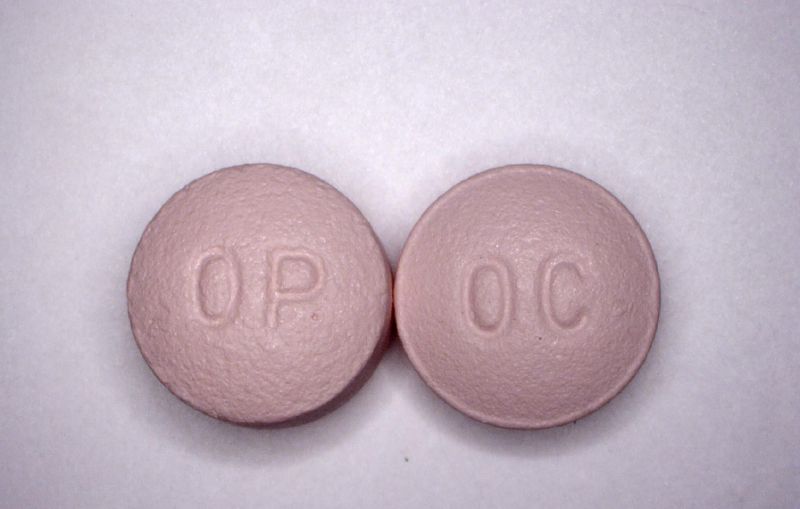
US doctors issued nearly 200 million prescriptions for OxyContin, pictured, and other
 opioid painkiller last year, the American Medical Association said (AFP Photo/Handout)

Chicago (AFP) - US doctors reduced the number of prescriptions for opioid painkillers last year, continuing a five-year trend, in an effort to reverse a deadly drug abuse epidemic, a report released Thursday said.

The American Medical Association (AMA) found prescriptions for drugs including OxyContin and Vicodin declined nine percent in 2017, or about 19 million fewer prescriptions compared to a year earlier.

Opioid prescriptions are down by 55 million since 2013, a 22 percent reduction nationwide and a sign that "physicians and other health care professionals are increasingly judicious when prescribing opioids," Patrice Harris, chairwoman of the AMA's Opioid Task Force, said in a written statement.

There were still nearly 200 million opioid painkiller prescriptions in the US last year, the AMA report said.

In October, President Donald Trump described the opioid crisis as a national public health emergency.

Overdoses from prescription painkillers and heroin -- a last-resort drug for opioid addicts -- exploded over the last 20 years and kill 115 Americans a day, according to the National Institute on Drug Abuse, a federal agency.

Deaths continue to mount, and significant spikes in opioid fatalities were seen in many states between 2015 and 2016, according to the latest data from the Centers for Disease Control and Prevention.

Opioids were a factor in more than 42,000 deaths in 2016, and opioid overdose deaths were five times higher in 2016 than 1999, said the CDC.

The Chicago-based AMA, which represents the nation's doctors, also found a 42 percent jump in the number of physicians certified to treat opioid addiction with the drug buprenorphine. There are now more than 50,000 US doctors with the capability.

"What is needed now is a concerted effort to greatly expand access to high quality care for pain and for substance use disorders. Unless and until we do that, this epidemic will not end," Harris said.

US doctors have faced pressure as the overprescribing of opioid drugs mushroomed into a drug abuse epidemic. After patients are hooked on the painkillers, they often turn to the illicit drug market for more pills, the synthetic opioid fentanyl, or the street drug heroin.

Pop icon Prince and rocker Tom Petty are among the most high profile victims of the epidemic.

States and municipalities throughout the US have sued drug makers and distributors, among them Purdue Pharma, which in February announced it was discouraging its salespeople from touting OxyContin.

Saturday, May 12, 2018

Dutch cancer hospital makes own version of expensive drug after finding new application

DutchNews, May 11, 2018

Photo: Depositphotos.com 

Dutch cancer hospital Antoni van Leeuwenhoek is making its own version of an expensive cancer medicine after finding that the drug helps a new group of patients. 

Vorinostat is used to treat a rare form of lymphoma but researchers at the Amsterdam hospital have found it is also effective on patients with melanoma which is resistant to standard treatments. 

The drug, which is not available for use in the Netherlands, costs upward of $100 per capsule but can be produced by the hospital pharmacy for €1.50. This is legal as long as the drug is used for clinical trials based on a new application for the drug, the hospital says. 

Merck, which makes Vorinostat, has only registered it for the treatment of lymphoma. 

A spokesman for the drugs company told the Volkskrant that ‘this medicine is still on the market but we no longer promote it or carry out any research using it.’ 

‘If this treatment works well for patients in our follow-up study, we will be able to treat a lot of people for little money,’ doctor Jan Schellens said on the hospital website. 

The initial study focused on six patients but this will now be expanded. Between 200 and 300 people develop resistant melanoma every year in the Netherlands. 

Licenced drugs

This is not the first time a Dutch hospital has opted to reproduce a licenced drug. In April, Amsterdam’s AMC teaching hospital said it is to start making its own version of medicine to treat a rare metabolic disorder because the medicine is no longer covered by health insurance after the price shot up. 

That drug, chenodeoxycholic acid or CDCA is produced by Italian pharmaceuticals company Leadiant. On April 1, the company ramped up the price by around 500% so it now costs some €200,000 per patient per year. The hospital can produce the drug for €25,000.

Friday, April 13, 2018

Dutch state buys EMA temporary offices for €43m

DutchNews, April 12, 2018

EMA’s new building is under construction. Artists impression: press hand out

The Dutch state has bought the building where the European Medicines Agency will be housed temporarily after its move from London post-Brexit. 

The state originally planned to lease the Sparkgebouw building for 10 years from owner OVG Real Estate, but buying the property has turned out to be cheaper, ‘particularly in the long term’ according to the home affairs ministry. 

The building, next to the Sloterdijk train station, has cost the state almost €43m. The ministry did not say what the leasing costs would have been. 

The permanent EMA building is under construction in Amsterdam’s Zuidas business district and will be completed in November 2019, several months after the EMA moves its operations.


The EMA site January 2018 Photo: S Boztas

Related Article:


Friday, April 6, 2018

Dutch hospital challenges big pharma by making own version of very pricey drug

DutchNews, April 5, 2018

Photo: Depositphotos.com

Amsterdam’s AMC teaching hospital is to start making its own version of a licenced drug to treat a rare metabolic disorder because the medicine is no longer covered by health insurance after the price shot up. 

The drug, chenodeoxycholic acid or CDCA is produced by Italian pharmaceuticals company Leadiant. On April 1, the company ramped up the price by around 500% so it now costs some €200,000 per patient per year. The hospital can produce the drug for €25,000. 

Hospital pharmacies make their own medicines more often but this case is unusual because of the financial considerations. The hospital is offering ‘a social and economically-responsible alternative to a registered medicine which is so expensive that it is inaccessible to patients,’ the AMC said. 

Just 60 patients in the Netherlands suffer from the disease CTX which the drug is used to treat. 

The drug has been available since the 1970s but Leadiant only registered it as an orphan medicine with the European medicines agency last year. Orphan status, given to drugs which are used to treat very specific and rare illnesses, means a drug cannot be copied for a 10-year period. 

Prescription 

There is a loophole, however:  a pharmacist can make the drug for their own patients. And even though the AMC only has two, ‘anyone can register at our pharmacy with a doctor’s prescription,’ AMC professor Carla Hollak told the NRC. 

The measure is being supported by health insurance companies. Health minister Bruno Bruins told RTL news that he preferred the use of registered medicines because of the tough procedures they have gone through. Nevertheless, he said, it is unacceptable that companies raise the price ‘to make fat profits’. 

Blackmail 

The Dutch healthcare institute Zorginstituut Nederland said in February insurers should stop paying for expensive drugs if pharmaceutical companies continue to refuse to say how they arrive at the price. 

The institute, which assesses the efficacy of new drugs and advises the government on whether they should be included in the basic healthcare policy, says the drugs companies are effectively blackmailing officials by refusing to be transparent about their prices. 

DutchNews.nl has asked Leadiant for comment on the AMC action and the drug price hike.

Related Article:


Tuesday, March 20, 2018

ME sufferers ‘being let down by healthcare system’

DutchNews, March 19, 2018


People suffering from ME are not receiving adequate treatment because many doctors and researchers are failing to take the condition seriously, the government’s health advisory body has said. 

In an official report, the Gezondheidsraad said the chronic condition was too often downgraded to ‘fatigue’ or a problem ‘between the ears’, while patients tended to be dismissed as attention seekers, NOS reported. 

Between 30,000 and 40,000 people in the Netherlands are estimated to suffer from ME or chronic fatigue syndrome. Some of them spend days in bed recovering. Patient Lisa Klaasen told NOS: ‘Compare it with a heavy flu. You’re ill and in pain and your whole body is constantly crying out with tiredness.’ 

Yvonne van der Ploeg, a member of the executive board of the ME/CFS association, said research into the condition had stood still for 40 years. ‘Now at last we can start to make inroads,’ she said. 

The Gezondheidsraad said diagnosis of the condition was hampered by doctors’ preconceptions and tendency to regard it as a psychological issue. Patients with ME are often required to undergo behavioural or occupational therapy to qualify for benefits and health insurance, even though these treatments are often ineffective.