(Subjects: Religion/Worship, Lightworkers, Food, Health, Prescription Drugs, Homeopathy, Innate (Body intelligence), New Age movement, Global Unity, ... etc.) - (Text version)

“…… Should I use Doctors and Drugs to Heal Me or Spiritual Methods?

"Dear Kryon, I have heard that you should stay natural and not use the science on the planet for healing. It does not honor God to go to a doctor. After all, don't you say that we can heal with our minds? So why should we ever go to a doctor if we can do it ourselves? Not only that, my doctor isn't enlightened, so he has no idea about my innate or my spiritual body needs. What should I do?"

First, Human Being, why do you wish to put so many things in boxes? You continue to want a yes and no answer for complex situations due to your 3D, linear outlook on almost everything. Learn to think out of the 3D box! Look at the heading of this section [above]. It asks which one should you do. It already assumes you can't do both because they seem dichotomous.

Let's use some spiritual logic: Here is a hypothetical answer, "Don't go to a doctor, for you can heal everything with your mind." So now I will ask: How many of you can do that in this room right now? How many readers can do that with efficiency right now? All of you are old souls, but are you really ready to do that? Do you know how? Do you have really good results with it? Can you rid disease and chemical imbalance with your mind right now?

I'm going to give you a truth, whether you choose to see it or not. You're not ready for that! You are not yet prepared to take on the task of full healing using your spiritual tools. Lemurians could do that, because Pleiadians taught them how! It's one of the promises of God, that there'll come a day when your DNA works that efficiently and you will be able to walk away from drug chemistry and the medical industry forever, for you'll have the creator's energy working at 100 percent, something you saw within the great masters who walked the earth.

This will be possible within the ascended earth that you are looking forward to, dear one. Have you seen the news lately? Look out the window. Is that where you are now? We are telling you that the energy is going in that direction, but you are not there yet.

Let those who feel that they can heal themselves begin the process of learning how. Many will be appreciative of the fact that you have some of the gifts for this now. Let the process begin, but don't think for a moment that you have arrived at a place where every health issue can be healed with your own power. You are students of a grand process that eventually will be yours if you wish to begin the quantum process of talking to your cells. Some will be good at this, and some will just be planting the seeds of it.

Now, I would like to tell you how Spirit works and the potentials of what's going to happen in the next few years. We're going to give the doctors of the planet new inventions and new science. These will be major discoveries about the Human body and of the quantum attributes therein.

Look at what has already happened, for some of this science has already been given to you and you are actually using it. Imagine a science that would allow the heart to be transplanted because the one you have is failing. Of course! It's an operation done many times a month on this planet. That information came from the creator, did you realize that? It didn't drop off the shelf of some dark energy library to be used in evil ways.

So, if you need a new heart, Lightworker, should you go to the doctor or create one with your mind? Until you feel comfortable that you can replace your heart with a new one by yourself, then you might consider using the God-given information that is in the hands of the surgeon. For it will save your life, and create a situation where you stay and continue to send your light to the earth! Do you see what we're saying?

You can also alter that which is medicine [drugs] and begin a process that is spectacular in its design, but not very 3D. I challenge you to begin to use what I would call the homeopathic principle with major drugs. If some of you are taking major drugs in order to alter your chemistry so that you can live better and longer, you might feel you have no choice. "Well, this is keeping me alive," you might say. "I don't yet have the ability to do this with my consciousness, so I take the drugs."

In this new energy, there is something else that you can try if you are in this category. Do the following with safety, intelligence, common sense and logic. Here is the challenge: The principle of homeopathy is that an almost invisible tincture of a substance is ingested and is seen by your innate. Innate "sees" what you are trying to do and then adjusts the body's chemistry in response. Therefore, you might say that you are sending the body a "signal for balance." The actual tincture is not large enough to affect anything chemically - yet it works!

The body [innate] sees what you're trying to do and then cooperates. In a sense, you might say the body is healing itself because you were able to give it instructions through the homeopathic substance of what to do. So, why not do it with a major drug? Start reducing the dosage and start talking to your cells, and see what happens. If you're not successful, then stop the reduction. However, to your own amazement, you may often be successful over time.

You might be able to take the dosage that you're used to and cut it to at least a quarter of what it was. It is the homeopathy principle and it allows you to keep the purpose of the drug, but reduce it to a fraction of a common 3D dosage. You're still taking it internally, but now it's also signaling in addition to working chemically. The signal is sent, the body cooperates, and you reduce the chance of side effects.

You can't put things in boxes of yes or no when it comes to the grand system of Spirit. You can instead use spiritual logic and see the things that God has given you on the planet within the inventions and processes. Have an operation, save your life, and stand and say, "Thank you, God, for this and for my being born where these things are possible." It's a complicated subject, is it not? Each of you is so different! You'll know what to do, dear one. Never stress over that decision, because your innate will tell you what is appropriate for you if you're willing to listen. ….”

Monsanto / GMO - Global Health


(Subjects: Big pharma [the drug companies of America] are going to have to change very soon or collapse. When you have an industry that keeps people sick for money, it cannot survive in the new consciousness., Global Unity, ... etc.) - (Text version)
"Recalibration of Free Choice"– Mar 3, 2012 (Kryon Channelling by Lee Caroll) - (Subjects: (Old) Souls, Midpoint on 21-12-2012, Shift of Human Consciousness, Black & White vs. Color, 1 - Spirituality (Religions) shifting, Lose a Pope “soon”, 2 - Humans will change react to drama, 3 - Civilizations/Population on Earth, 4 - Alternate energy sources (Geothermal, Tidal (Pedal wheels), Wind), 5 – Financials Institutes/concepts will change (Integrity – Ethical) , 6 - News/Media/TV to change, 7 Big Pharmaceutical company will collapse “soon”, (Keep people sick), (Integrity – Ethical) 8 – Wars will be over on Earth, Global Unity, … etc.) - (Text version)
"The Recalibration of Awareness – Apr 20/21, 2012 (Kryon channeled by Lee Carroll) (Subjects: Old Energy, Recalibration Lectures, God / Creator, Religions/Spiritual systems (Catholic Church, Priests/Nun’s, Worship, John Paul Pope, Women in the Church otherwise church will go, Current Pope won’t do it), Middle East, Jews, Governments will change (Internet, Media, Democracies, Dictators, North Korea, Nations voted at once), Integrity (Businesses, Tobacco Companies, Bankers/ Financial Institutes, Pharmaceutical company to collapse), Illuminati (Started in Greece, Shipping, Financial markets, Stock markets, Pharmaceutical money (fund to build Africa, to develop)), Shift of Human Consciousness, (Old) Souls, Women, Masters to/already come back, Global Unity.... etc.) - (Text version)
"THE BRIDGE OF SWORDS" – Sep 29, 2012 (Kryon channeled by Lee Carroll) (Subjects: ... I'm in Canada and I know it, but I will tell those listening and reading in the American audience the following: Get ready! Because there are some institutions that are yet to fall, ones that don't have integrity and that could never be helped with a bail out. Again, we tell you the biggest one is big pharma, and we told you that before. It's inevitable. If not now, then in a decade. It's inevitable and they will fight to stay alive and they will not be crossing the bridge. For on the other side of the bridge is a new way, not just for medicine but for care. ....) - (Text Version)

Pharmaceutical Fraud / Corruption cases

Health Care

Health Care
Happy birthday to Percy Julian, a pioneer in plant-drug synthesis. His research produced steroids like cortisone. (11 April 2014)
Showing posts with label Innovation. Show all posts

Friday, October 16, 2020

Fast Covid test development speeds up, latest gives result in less than a minute

DutchNews, October 15, 2020 

Photo: Brandon Hartley

A Dutch company has developed a breathalyser test which will almost instantly exclude people who do not carry the coronavirus and which could significantly ease the pressure on testing facilities. 

The device, which is made by Breathomix in Leiden and can detect particles in people’s breath, was tested on 1,800 people in an Amsterdam testing facility. They then had the more time consuming PCR test.

Investigations showed that some 1,350 people could have been sent home immediately had they taken only the breathalyser test. The device was able to exclude coronavirus in three quarters of the participants but was inconclusive in the remaining quarter. 

Despite this it is thought that a large scale application of the test, which takes approximately 45 seconds, including the result, could ease the pressure on testing facilities, some of which are reaching crisis point. 

The health ministry has ordered hundreds of the breathalysers which, on final approval, will be used by testing facilities by the end of next month, health minister Hugo de Jonge said on Thursday. 

TNO 

Meanwhile Dutch research institute TNO announced it has developed a fast test which it claims is as reliable as the PCR  process currently used in nationwide testing centres. 

It too was validated at a facility in the capital and showed a 99% accuracy rate compared to the PCR test when used on 900 people. 

TNO developed a so-called LAMP-test which works at a molecular level and gives a result in 45 minutes to an hour. 

Last week, two fast tests produced by American companies BD and Abbot were approved by the health ministry. Each of these take 15 minutes to come up with a result,and will be used in addition to the normal health board tests.

Wednesday, June 3, 2020

As doctors go virtual, pandemic turbocharges telemedicine

Yahoo – AFP, Kelly MACNAMARA, June 2, 2020

Governments and private firms have set up telemedicine clinics for patients who
suspect they have the new coronavirus (AFP Photo/Alexander NEMENOV)

Will visiting the doctor ever be the same again?

In a matter of weeks, the coronavirus pandemic sparked a technological revolution in healthcare systems across the world that might otherwise have taken years.

Spurred on by fears of contagion in wards and waiting rooms, many health practitioners are replacing the face-to-face meetings that have always underpinned general practice, with patient consultations by telephone and online video apps.

Some of the most radical changes have been in primary healthcare, where doctors have often faced shortages of protective equipment, but specialists in everything from mental health to eye care have also turned to technology to treat patients at a distance.

"General practice has undergone significant changes in the way GPs and our teams have delivered patient care during the pandemic -- and the speed in which these changes were implemented has been remarkable," Professor Martin Marshall, Chair of Britain's Royal College of GPs told AFP.

As the virus spread, health authorities in the UK, Europe and elsewhere updated guidance on everything from data protection to how to build trust remotely.

The United States rolled back restrictions on access to telemedicine, and eased privacy regulations to allow people to use platforms like Skype and FaceTime.

"People are now seeing this model, which we thought would take years and years to develop. And it's probably been accelerated by a decade," Chris Jennings, US policy consultant and former White House health care adviser told STAT news recently.

Globally, 58 percent of surveyed countries are now using telemedicine, the World Health Organization said Monday, adding the figure was 42 percent among low income nations.

Layla McCay, a director at the NHS Confederation representing British healthcare services, told AFP that most of the UK's 1.2 million daily face-to-face primary care consultations were done remotely "in the space of weeks".

But there were challenges.

"My first video consultation was a mess. Builders were drilling, the microphone failed, a colleague walked in, and lockdown was imminent," Camille Gajria, a doctor and clinical teaching fellow at Imperial College London, told the British Medical Journal.

She said teleconsultations can be efficient but warned of "cognitive bias" -- a doctor, for example, might assume that a child playing in the background is the one being discussed.

Hospitals like this one in Mexico have used online video platforms to let COVID-19 
patients communicate remotely with their families (AFP Photo/ULISES RUIZ)

There are also concerns that vulnerable patients might find it difficult to talk about mistreatment at home, while elderly people could struggle to navigate unfamiliar technology.

Remote medicine

Telemedicine may seem like a product of the internet age, but it has been around for decades, developing alongside communication technology.

One big leap came during the space race of the 1960s, when scientists worried about the effect of zero gravity on the human body. Would it impede blood circulation or breathing?

To find out, both the US and Soviet Union conducted test flights with animals hooked up to medical monitoring systems that transmitted biometric data back to scientists on Earth. Later, longer missions meant astronauts needed systems that could diagnose and help treat medical emergencies.

NASA went on to develop terrestrial telemedicine, including a project to provide healthcare to the isolated Tohono O'odham reservation in Arizona, as well as disaster response in the 1985 Mexico City and 1988 Armenia earthquakes.

While the coronavirus pandemic has driven sweeping changes in the way many people see their local doctor, it has also highlighted the role telemedicine can play in connecting clinicians with remote communities.

In India, which has just 8.6 medical workers per 10,000 people according to 2018 WHO figures, the majority of doctors are concentrated in urban centres, while some 70 percent of people live in rural areas.

Ayush Mishra, founder of the telehealth provider Tattvan, said this means people outside bigger towns are often forced to seek medical advice from overstretched or ill-qualified practitioners.

His business, one of a growing number of telehealth providers in India, operates 18 clinics, mostly ATM-style booths that are manned by a medical assistant who can take vital measurements and linked with doctors in private hospitals in larger towns.

The firm languished in a legal grey zone for years until the coronavirus crisis spurred the government into broadening regulatory approval for virtual consultations. Now he hopes to open hundreds of clinics around the country.

Mishra traces his enthusiasm for telemedicine to a horrific motorbike accident when he was a biomedical engineering student in the northern city of Jaipur.

Governments and private firms have set up telemedicine clinics for patients 
who suspect they have the new coronavirus (AFP Photo/Alexander NEMENOV)

Severely injured, he was driven ten hours to his hometown in Uttar Pradesh, before falling into a coma as a local doctor performed surgery.

His family was overwhelmed by "panic" until his father spoke by telephone to a surgeon at a hospital in Delhi, enabling them to arrange treatment in the city.

Mishra lost his leg, but told AFP the experience inspired him to want to equalise medical access for people in smaller towns.

"You need to be able to offer this access -- it's a human right," he said.

Not going back?

Internet-connected thermometers, pulse oximeters to measure oxygen levels, and smart devices that monitor vital signs are all widening the scope of what is possible in remote medicine.

In an April article for JAMA Neurology, experts from the Netherlands and US said telemedicine could be a useful tool for in-home training, such as activities for survivors of stroke. Patients, they noted, could be monitored via sensors in watches or phones.

"We hope that this current COVID-19 crisis will soon be resolved. However, it is as the old saying goes: 'never waste a good crisis'," they said.

"Telemedicine for chronic neurological disorders should become part of the new normal rather than the exception."

Marshall said there are still many routine procedures -- vaccinations, blood tests and physical examinations -- that cannot be done remotely.

"Those living with multiple conditions and other complex health needs really benefit from seeing their doctor in person -- and this is helpful for the GP, as well," he said.

But he added that research supports the use of remote consultations for patients with simple conditions, or who have "transactional" needs like a repeat prescription.

Many say they want at least some of the changes to stay.

"It has certainly turbocharged the digital transition nationally," said McCay of the NHS Confederation.

"Lots of feedback from our members shows the culture has fundamentally changed, and clinicians who were perhaps previously resistant to digitisation are now realising its benefits."

"We can't go backwards," she added.

Thursday, April 16, 2020

Afghan girls try building ventilator from used car parts

Yahoo – AFP, Usman SHARIFI, April 15, 2020

The home-built ventilator could be copied for as little as $300 (AFP Photo/
Ahmad Idres Naderi)

A team of robot-designing girls in Afghanistan is trying to build a low-cost medical ventilator from car parts, as health authorities look to boost critical-care capabilities for coronavirus patients in the impoverished country.

If the teenagers succeed and can get government approval for their prototype, they say it could be replicated for as little as $300, where normally ventilators sell for around $30,000.

"The team is working with local health specialists, as well as experts from Harvard University, to produce the prototype based on a design by Massachusetts Institute of Technology," said Roya Mahboob, who runs an Afghan tech company and sponsors the team of five girls, aged 14-17.

They are part of a bigger group of high-achieving high school girls known as the "Afghan Dreamers", from the western city of Herat, where coronavirus is on the rise after thousands of people returned from neighbouring Iran as it experienced a spike in cases.

The girls made headlines in 2017 after being denied visas to take part in a robotics competition in Washington -- before President Donald Trump intervened and they were allowed to travel.

They are taking engine and battery parts from a Toyota Corolla -- ubiquitious on the streets of Afghanistan -- to produce a prototype they started designing after the Herat governor called for more ventilators as coronavirus cases rose.

Central to the ventilator is a self-inflating plastic sac known as an Ambu bag that medical staff use to help patients breathe. The girls' prototype uses a mechanical system to operate the bag automatically and accurately.

"The complicated part is how to adjust the timing and pressure of pumping, as different patients require different volume and pressure of air based on their age and the severity of their condition," Somaya Farooqi, the team's 17-year-old captain, told AFP.

With a population of 35 million, Afghanistan only has about 300 ventilators.

Wahidullah Mayar, a spokesman for Afghanistan's health ministry, said officials have asked specialists and engineers to help the team.

"We appreciate and encourage these hardworking girls, our sisters, for their efforts to produce ventilators," Mayar said.

Any ventilator prototype would have to be approved by the World Health Organization and the Afghan health ministry before the team could start producing more devices, Mayar said.

As of Wednesday, Afghan officials had reported at least 784 coronavirus cases and 24 deaths across the country. The true number of cases is feared to be much higher, as only limited testing kits are available.

Thursday, March 26, 2020

3-D printers help save lives from virus in Italy

Yahoo – AFP, Arman SOLDIN, March 24, 2020

The margin of error for the 3-D printing, shown here, of Venturi respirator valves
is tiny (AFP Photo/Handout)

Rome (AFP) - They may not be a miracle cure or a vaccine, but respirator valves from 3-D printers have helped coronavirus patients breathe a little easer in the Italian epicentre of COVID-19.

Italy has thrown everything at a pandemic that has killed more than 6,000 people in just a month, more than anywhere else.

Hospitals in the northern Italian heart of the outbreak have had to make life-and-death decisions about which patients to try and save, and which to send home.

There are not enough beds, doctors, equipment -- and the severe cases keep flooding in.

Italy's death rate slowed slightly between Saturday and Monday, giving a glimmer of hope that the end is in sight.

Still, the Mediterranean country registered more than 2,000 fatalities and 16,000 confirmed infections in the three-day span.

Currently, more than 3,200 intensive care patients are receiving treatment for COVID-19.

Into this unfolding disaster stepped Alessandro Romaioli, a young engineer from an Italian company called Isinnova, which specialises in 3-D printing.

The company's usual products include earthquake sensors and bicycle parts.

But that changed when a local newspaper in Brescia, where the death and infection rates are among the highest in the world, contacted Romaioli and his startup, trying to find ways to help the city's overwhelmed hospital.

"They were asking if it was possible to 3-D-print Venturi valves" -- a critical part of a respirator machine -- Romaioli told AFP in a Skype interview from Brescia.

Romaioli had no idea.

The Isinnova team went to the hospital for a closer look at the part. They then drafted a blueprint for use by the 3-D printer.

No one was sure it would work because the margin of error for such valves is tiny.

"We printed four prototypes and brought them back to the hospital," Romaioli said. "And they told us they worked."

'Fantastic!'

The Brescia hospital staff were ecstatic.

"They tested them on patients and the results were excellent. They told us: 'Fantastic! Now we need 100 more of these'."

Mauro Borelli, the hospital director, was effusive in his praise for the printers.

"Our respirator valves had run out and we no longer knew how to give oxygen to our patients," Romaioli told the Il Fatto Quotidiano daily.

"The 3-D printing saved us."

Isinnova has also adapted diving masks so that they can be connected to respirators, and numerous other companies are trying to give a similar helping hand.

Calzedonia, an Italian fashion brand that usually makes lingerie and hosiery, said its plants began daily production of 10,000 face masks on Monday.

It promises to ramp up production to help meet seemingly endless demand.

Other companies retooling their equipment to help battle the stealth killer include Macron, an Italian sports apparel company, which is using its factories in China to produce masks, gloves and doctors' gowns.

The Italian-American automaker Fiat-Chrysler, which has suspended production across Europe, has pledged to make one million masks by May.

Friday, March 20, 2020

Thai hospitals deploy 'ninja robots' to aid virus battle

Yahoo – AFP, Pitcha DANGPRASITH and Lillian SUWANRUMPHA, March 19, 2020

The 'ninjas' have helped staff at four hospitals in and around Bangkok to reduce
their risk of infection by allowing doctors and nurses to speak to patients over a
video link (AFP Photo/Lillian SUWANRUMPHA)

Bangkok (AFP) - Thai hospitals are deploying "ninja robots" to measure fevers and protect the health of overburdened medical workers on the frontlines of the coronavirus outbreak.

First built to monitor recovering stroke patients, the machines have been quickly repurposed to help fight the disease, which has so far killed nearly 9,000 people around the world.

They have helped staff at four hospitals in and around Bangkok to reduce their risk of infection by allowing doctors and nurses to speak to patients over a video link.

"They can stand outside the room and communicate with patients inside through the robot," said Viboon Sangveraphunsiri of Chulalongkorn University.

Viboon's engineering team is racing to build more "ninjas" for another 10 
hospitals around the country (AFP Photo/Lillian SUWANRUMPHA)

Later models will be designed to bring food and medicine to patients, and could also eventually be used to disinfect hospital wards, Viboon told AFP.

His engineering team is racing to build more "ninjas" -- known as such because of their matte black exterior -- for another 10 hospitals around the country.

Thailand has more than 200 confirmed COVID-19 infections, including at least one death. More than 40 have recovered and been discharged from hospital.

Authorities recently ordered the closure of bars, massage parlours and entertainment venues to help prevent new cases.

Thai officials have so far stopped short of imposing the full
lockdowns seen in other countries (AFP Photo/Lillian 
SUWANRUMPHA)

New rules also require visitors entering the country to produce a health certificate.

Officials have so far stopped short of imposing the full lockdowns seen in other countries in a bid to contain damage to Thailand's crucial tourism sector.

But the government's reassurances that the pandemic is under control have not stopped bouts of panic buying in grocery stores.

Doctors are also urging Thais to stay home to curb the spread of the virus.

Friday, January 31, 2020

New prostate cancer protocol quicker and less painful

DutchNews, January 30, 2020 

Cancer cells. Photo: Depositphotos.com

A new protocol in investigating potential prostate cancer will make the process cheaper, quicker and less painful, broadcaster NOS reports. 

If a blood test has suggested possible prostate cancer, the next step will now be an MRI scan instead of a painful needle biopsy. This biopsy typically involves inserting a needle through the rectal wall into the prostate from which 12 samples used to be taken. 

‘Thanks to the scan we can tell exactly where the cancer is and, consequently, we know where to perform a biopsy and will have to remove only three samples. If nothing shows up on the scan, the chances are that nothing is the matter and no biopsy is needed,’ radiology professor and initiator of the new protocol Jelle Barentz told NOS. 

The new protocol will be used in all Dutch hospitals from Thursday. 

Under the old guideline 60% of men who had the biopsy did not have a tumour. That means 23,000 out of 40,000 men no longer have to undergo a procedure which is both painful and can cause complications, such as bleeds and inflammation. 

Some 10,000 men are diagnosed with an aggressive form of the cancer every year, of whom 2,500 die. The new method will only detect the aggressive kind, which is an added bonus, Barentz said, because non-aggressive prostate cancer does not kill and treatment is not necessary. 

It is estimated that costs will also go down by €375 per patient, or €15m in total.

Wednesday, January 29, 2020

Philips to spin off domestic appliance unit, focus on healthcare technology

DutchNews, January 28, 2020 

Philips at a radiology trade fair in December. Photo: Philips

Dutch electronics giant Philips is to spin off its domestic appliance division to focus purely on health technology and personal care items. 

The company has started creating a separate legal structure for its domestic appliances division, which booked sales of €2.3bn last year, and expects this process to be completed within a year to 18 months. 

The unit, which includes air fryers and coffee makers, has made ‘a very important contribution to Philips’ chief executive Frans van Houten said in a statement. 

‘However this business is not a strategic fit for our future as a health technology leader,’ he said. ‘We are committed to finding a good home for this business to continue to thrive and grow over time, as we expand and invest in our consumer health and professional healthcare related businesses.’ 

Philips made the announcement at the publication of its 2019 figures. The company saw like-for-like full year sales rise 4.4%% to €19.5bn. Income from continuing operations was down slightly at €1.2bn. 

Houten said ‘headwinds’ were to blame for the company’s failure to meet its profitability improvement target. 

In 2016, Philips spun off its lighting activities, which are now bourse-listed under the name Signify. The company’s roots date back 130 years to the light bulb business founded by Frederik and Gerard Philips in 1891 in Eindhoven.

Friday, January 17, 2020

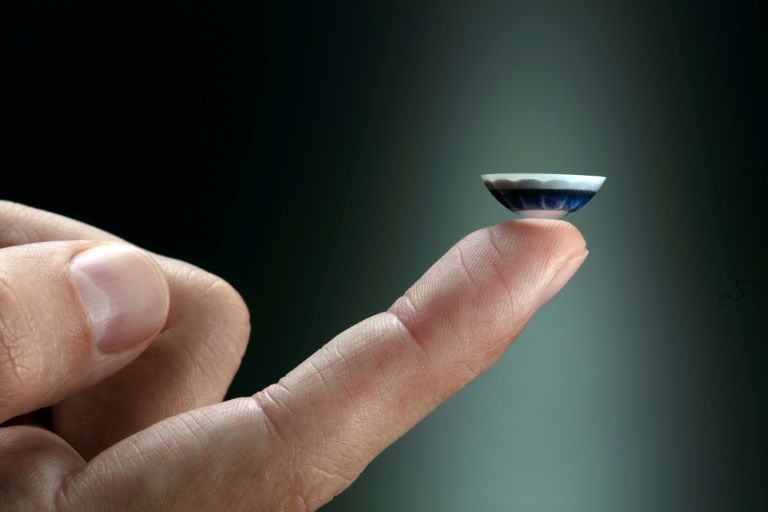
'Invisible computing' startup unveils smart contact lens

Yahoo – AFP, January 16, 2020

Mojo Vision, a California startup, says its smart contact lens is part of a move to
"invisible computing," which allows people to interact more naturally with technology
(AFP Photo/HO)

Washington (AFP) - A startup focused on "invisible computing" Thursday unveiled a smart contact lens which delivers an augmented reality display in a user's field of vision.

The Mojo Vision contact lens offers a display with information and notifications, and allows the user to interact by focusing on certain points.

The rigid contact lens, which the company has been developing in stealth mode for some 10 years, may also be used to help people with visual impairments by using enhanced image overlays, and has obtained US approval for testing it as a medical device.

"Mojo has a vision for invisible computing where you have the information you want when you want it and are not bombarded or distracted by data when you don't," said chief executive Drew Perkins.

In a demonstration to an AFP reporter, company executives showed how the contact lens could enable users to see a virtual teleprompter, navigation instructions or other interactions that appear floating in the field of vision by projecting a micro-LED display to the retina.

A user, wearing two lenses which may be fitted with a correction prescription, could "click" by concentrating on an icon -- to launch a music player, for example -- and turn off by looking away.

Mojo said it had no timetable for a commercial launch. But it has received approval from the US Food and Drug Administration as a "breakthrough" device to test the contact lens to help people with visual impairments such as macular degeneration or retinitis pigmentosa.

A smart contact lens prototype developed by California startup Mojo Vision delivers 
an augmented reality display in the user’s field and is being tested to help people with 
visual impairments (AFP Photo/Rob Lever)

"These are people who are underserved by technology today," said Steve Sinclair, senior vice president of the startup based in Saratoga, California.

The company said the contact lens is designed to provide overlays that augment sight for people with "low vision" and may assist in mobility, reading and other functions.

Mojo has raised $100 million and has executives with experience at Google, Apple and other Silicon Valley firms, with opticians and ophthalmologists also working on the project.

The contact lens aims to enable people to move away from physical devices and interact more naturally with technology. It also could have business applications, allowing workers or specialists access to real-time information in their field of vision without a bulky headset.

A challenge has been to pack into the lens the complex circuitry, image sensor, wireless radio and battery needed for the wearable device.

Executives said the current version would transmit and receive information wirelessly through a portable relay box which could be clipped to a belt, but they hope to link directly to smartphones in the future.

The company will be testing its vision-enhancing applications with the Vista Center for the Blind and Visually Impaired in Palo Alto, California.

Friday, December 27, 2019

2019: the year gene therapy came of age

Yahoo – AFP, Ivan Couronne, December 26, 2019

Victoria Gray's blood was drawn so that doctors could get to the cause of her illness
-- stem cells from her bone marrow that were making deformed red blood cells (AFP Photo)

Washington (AFP) - In the summer, a mother in Nashville with a seemingly incurable genetic disorder finally found an end to her suffering -- by editing her genome.

Victoria Gray's recovery from sickle cell disease, which had caused her painful seizures, came in a year of breakthroughs in one of the hottest areas of medical research -- gene therapy.

"I have hoped for a cure since I was about 11," the 34-year-old told AFP in an email.

"Since I received the new cells, I have been able to enjoy more time with my family without worrying about pain or an out-of-the-blue emergency."

Over several weeks, Gray's blood was drawn so doctors could get to the cause of her illness -- stem cells from her bone marrow that were making deformed red blood cells.

The stem cells were sent to a Scottish laboratory, where their DNA was modified using Crispr/Cas9 -- pronounced "Crisper" -- a new tool informally known as molecular "scissors."

The genetically edited cells were transfused back into Gray's veins and bone marrow. A month later, she was producing normal blood cells.

DNA from Gray's stem cells was modified at a Scottish laboratory, using Crispr/Cas9 -- 
pronounced "Crisper" -- a new tool informally known as molecular "scissors" (AFP 
Photo/GERARD JULIEN)

Medics warn that caution is necessary but, theoretically, she has been cured.

"This is one patient. This is early results. We need to see how it works out in other patients," said her doctor, Haydar Frangoul, at the Sarah Cannon Research Institute in Nashville.

"But these results are really exciting."

In Germany, a 19-year-old woman was treated with a similar method for a different blood disease, beta thalassemia. She had previously needed 16 blood transfusions per year.

Nine months later, she is completely free of that burden.

For decades, the DNA of living organisms such as corn and salmon has been modified.

But Crispr, invented in 2012, made gene editing more widely accessible. It is much simpler than preceding technology, cheaper and easy to use in small labs.

The technique has given new impetus to the perennial debate over the wisdom of humanity manipulating life itself.

Crispr made gene editing more widely accessible - but has given new impetus to the 
perennial debate over the wisdom of humanity manipulating life (AFP Photo/ERIC 
PIERMONT)

"It's all developing very quickly," said French geneticist Emmanuelle Charpentier, one of Crispr's inventors and the cofounder of Crispr Therapeutics, the biotech company conducting the clinical trials involving Gray and the German patient.

Cures

Crispr is the latest breakthrough in a year of great strides in gene therapy, a medical adventure started three decades ago, when the first TV telethons were raising money for children with muscular dystrophy.

Scientists practising the technique insert a normal gene into cells containing a defective gene.

It does the work the original could not -- such as making normal red blood cells, in Victoria's case, or making tumor-killing super white blood cells for a cancer patient.

Crispr goes even further: instead of adding a gene, the tool edits the genome itself.

After decades of research and clinical trials on a genetic fix to genetic disorders, 2019 saw a historic milestone: approval to bring to market the first gene therapies for a neuromuscular disease in the US and a blood disease in the European Union.

They join several other gene therapies -- bringing the total to eight -- approved in recent years to treat certain cancers and an inherited blindness.

Scientific director of the Telethon Serge Braun poses for a photograph after a press 
conference to present the Telethon 2018, the annual fundraising for medical research, 
at the Myology Institute in Paris on December 3, 2018 (AFP Photo)

Serge Braun, the scientific director of the French Muscular Dystrophy Association, sees 2019 as a turning point that will lead to a medical revolution.

"Twenty-five, 30 years, that's the time it had to take," he told AFP from Paris.

"It took a generation for gene therapy to become a reality. Now, it's only going to go faster."

Just outside Washington, at the National Institutes of Health (NIH), researchers are also celebrating a "breakthrough period."

"We have hit an inflection point," said Carrie Wolinetz, NIH's associate director for science policy.

These therapies are exorbitantly expensive, however, costing up to $2 million -- meaning patients face grueling negotiations with their insurance companies.

They also involve a complex regimen of procedures that are only available in wealthy countries.

Gray spent months in hospital getting blood drawn, undergoing chemotherapy, having edited stem cells reintroduced via transfusion -- and fighting a general infection.

"You cannot do this in a community hospital close to home," said her doctor.

French geneticist Emmanuelle Charpentier, one of Crispr's inventors, doesn't believe 
in the more dystopian scenarios that have been predicted for gene therapy (AFP Photo/
ANDER GILLENEA)

However, the number of approved gene therapies will increase to about 40 by 2022, according to MIT researchers.

They will mostly target cancers and diseases that affect muscles, the eyes and the nervous system.

Bioterrorism

Another problem with Crispr is that its relative simplicity has triggered the imaginations of rogue practitioners who don't necessarily share the medical ethics of Western medicine.

Last year in China, scientist He Jiankui triggered an international scandal -- and his excommunication from the scientific community -- when he used Crispr to create what he called the first gene-edited humans.

The biophysicist said he had altered the DNA of human embryos that became twin girls Lulu and Nana.

His goal was to create a mutation that would prevent the girls from contracting HIV, even though there was no specific reason to put them through the process.

Chinese scientist He Jiankui, pictured in 2018, used Crispr to create what he called 
the first gene-edited humans (AFP Photo/Anthony WALLACE)

"That technology is not safe," said Kiran Musunuru, a genetics professor at the University of Pennsylvania, explaining that the Crispr "scissors" often cut next to the targeted gene, causing unexpected mutations.

"It's very easy to do if you don't care about the consequences," Musunuru added.

Despite the ethical pitfalls, restraint seems mainly to have prevailed so far.

The community is keeping a close eye on Russia, where biologist Denis Rebrikov has said he wants to use Crispr to help deaf parents have children without the disability.

There is also the temptation to genetically edit entire animal species -- malaria-causing mosquitoes in Burkina Faso or mice hosting ticks that carry Lyme disease in the US.

The researchers in charge of those projects are advancing carefully, however, fully aware of the unpredictability of chain reactions on the ecosystem.

A picture taken at the French National Institute of Agricultural Research (INRA) in 
Maison-Alfort, on July 20, 2016 shows a tick, whose bite can transmit the Lyme 
disease (AFP Photo/BERTRAND GUAY)

Charpentier doesn't believe in the more dystopian scenarios predicted for gene therapy, including American "biohackers" injecting themselves with Crispr technology bought online.

"Not everyone is a biologist or scientist," she said.

And the possibility of military hijacking to create soldier-killing viruses or bacteria that would ravage enemies' crops?

Charpentier thinks that technology generally tends to be used for the better.

"I'm a bacteriologist -- we've been talking about bioterrorism for years," she said. "Nothing has ever happened."

Sunday, September 15, 2019

In Ivory Coast, telemedicine revolution proves blessing for heart patients

Yahoo – AFP, David ESNAULT, September 14, 2019

Thousands of heart patients in Ivory Coast are checked by telemedicine
each year (AFP Photo/DAVID ESNAULT)

Bouaké (Ivory Coast) (AFP) - Every time Catherine Coulibaly's 19-year-old son had to make a routine appointment with the cardiologist for his heart condition, she gritted her teeth as she silently counted the financial cost.

It wasn't just the hospital fee -- there was the transport, food and accommodation, too, all of it amounting to a hefty burden for an Ivorian family on a modest income.

But thanks to telemedicine -- consultations that doctors conduct through the internet or by phone -- this cost is now a fading memory.

Her son can book an appointment at a telemedicine facility in a nearby town in northern Ivory Coast.

There, he is attached to monitoring machines which send the data sent to Bouake University Hospital in the centre of the country, where it is scrutinised by a heart doctor.

The fledgling technology has long been championed by health advocates for poor rural economies.

Ivory Coast has become an African testbed for it, thanks to a project linking the Bouake hospital's cardiac department with health centres in several northern towns, some of which are a four-hour drive away.

Telemedicine "caused a sigh of relief for the population of Bouake, Boundiali, Korhogo, everyone," says Auguste Dosso, president of the "Little Heart" association, which helps families with cardiac health issues.

Some 45 percent of the Ivorian population live below the poverty line, according to the World Bank's latest estimate in 2017. And the minimum monthly wage -- not always respected -- is only around $100, or 90 euros.

Heart disease surging

The pioneer behind the scheme is cardiologist Florent Diby, who set up an association called Wake Up Africa.

In Ivory Coast, heart disease, diabetes and other "lifestyle" ailments are surging, Diby explained.

Cardiac specialists are rare in Ivory Coast -- patients can spend much of their
income in transport and accommodation when they need a consultation 
(AFP Photo/DAVID ESNAULT)

"Urbanisation is making people more sedentary, and there's the rise in tobacco consumption, changes in diet, stress," Diby said.

Three decades ago, only around one in eight of the Ivorian population had high blood pressure -- now the figure is one in four, on a par with parts of Western Europe.

But in Ivory Coast -- and across Africa -- well-equipped cardiology units are rare.

"Ninety percent of heart attacks can be diagnosed by telemedicine, so for us cardiologists it's a revolutionary technology," said Diby.

The beauty of the telemedicine scheme is that neither the doctor nor the patient has to travel far.

The cardiac patient is hooked up to the electrocardiogram (ECG) and other diagnostic machines with the help of a technician in a local health centre, which is connected to a computer in Bouake's University Hospital.

The cardiologist there can then see the results in real time, provide a diagnosis and prescribe treatment.

The five-year-old project has already linked 10 health centres to the seven cardiologists at Bouake, enabling 4,800 patients in other towns to receive consultations by telemedicine each year. The goal is to expand this to 20 sites, doubling the intake.

Expertise France, the French public agency for international technical assistance, subsidises up to 185,000 euros of the network, which pays for equipment such as computers, artificial intelligence software and internet connections.

Diby is now calling for telemedicine to be expanded in other medical fields such as neurology and psychiatry, not just in the Ivory Coast, but across West Africa too.

That opinion is shared by other experts. Sixty percent of Africans live in rural areas, where shortages of doctors are usually acute.

But numerous hurdles need to be overcome, especially investment in computers and access to the internet, according to a 2013 analysis published by the US National Library of Medicine.